
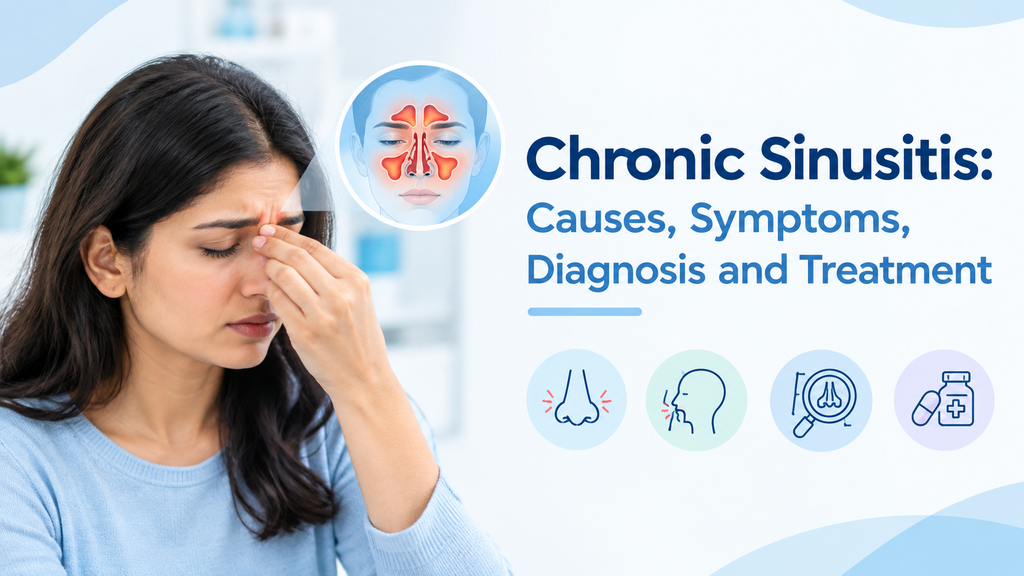
Chronic sinusitis is a condition in which inflammation of the sinuses persists for a prolonged period, often causing nasal blockage, facial pressure, nasal discharge, reduced sense of smell and other symptoms. If symptoms continue despite appropriate treatment or keep returning, an ENT specialist can evaluate the underlying cause and recommend suitable treatment.
For people looking for sinus treatment in Hyderabad, understanding the cause of chronic sinusitis is an important first step toward appropriate management.
What Is Chronic Sinusitis?
The sinuses are air-filled spaces around the nose and eyes that are connected to the nasal passages. When the lining of these spaces becomes inflamed and normal drainage is affected, sinus symptoms can develop.
When sinus symptoms persist for a long period, the condition may be classified as chronic sinusitis.
Chronic sinusitis can have different contributing factors, so treatment is not the same for everyone.
What Are the Symptoms of Chronic Sinusitis?
Common symptoms may include:
- Persistent nasal blockage or congestion
- Nasal discharge
- Postnasal drip
- Facial pressure or discomfort
- Reduced sense of smell
- Head or facial pain
- Cough, particularly with postnasal drainage
- Bad breath in some cases
- Feeling of pressure around the nose, cheeks or forehead
Symptoms can vary from person to person.
What Causes Chronic Sinusitis?
Several factors may contribute to persistent sinus inflammation.
1. Recurrent or Persistent Inflammation
Repeated inflammation of the nasal and sinus passages can interfere with normal drainage.
2. Nasal Structural Problems
Structural conditions such as a deviated nasal septum or enlarged nasal structures may contribute to nasal obstruction and impaired sinus drainage in some people.
3. Allergies
Allergic inflammation can cause nasal congestion and swelling, which may contribute to ongoing sinus symptoms.
4. Nasal Polyps
Nasal polyps are non-cancerous growths that can develop in the lining of the nose or sinuses and may contribute to obstruction and reduced sense of smell.
5. Recurrent Infections
Repeated sinus infections can contribute to ongoing inflammation in some individuals.
Because there can be multiple causes, an ENT evaluation can help determine what may be contributing to persistent symptoms.
Chronic Sinusitis vs Acute Sinusitis
The duration and pattern of symptoms can help distinguish different forms of sinus disease.
Acute sinusitis generally develops over a shorter period and is often associated with an infection or respiratory illness.
Chronic sinusitis involves persistent inflammation and symptoms over a much longer period.
The exact diagnosis should be made by a healthcare professional based on symptoms and clinical evaluation.
When Should You See an ENT Specialist?
Consider consulting an ENT specialist if you experience:
- Persistent nasal blockage
- Repeated sinus infections
- Long-lasting nasal discharge
- Reduced sense of smell
- Persistent facial pressure
- Symptoms that repeatedly return
- Symptoms that do not improve with appropriate treatment
An ENT specialist can examine the nose and sinuses and determine whether additional investigations are needed.
How Is Chronic Sinusitis Diagnosed?
Diagnosis generally starts with your symptoms and medical history.
Depending on the situation, an ENT evaluation may include:
Medical History
The doctor may ask about the duration of symptoms, previous sinus infections, allergies, medications and previous treatment.
Nasal and ENT Examination
The nose, throat and related structures may be examined to identify signs of inflammation, obstruction or other abnormalities.
Nasal Endoscopy
In selected patients, nasal endoscopy may be used to examine the nasal passages and areas around the sinus openings in greater detail.
Imaging
Imaging such as a CT scan may be recommended in selected cases, particularly when chronic sinus disease or a structural problem needs further evaluation.
Not every patient with sinus symptoms requires every investigation.
How Is Chronic Sinusitis Treated?
Treatment depends on the underlying cause, severity and individual symptoms.
Possible treatment approaches may include:
Medical Treatment
Depending on the diagnosis, a doctor may recommend treatments such as appropriate nasal medications, treatment for allergies or other measures designed to reduce inflammation and improve nasal function.
Treatment should be selected based on medical evaluation rather than self-medication.
Managing Allergies
If allergies contribute to symptoms, identifying and managing the underlying allergic condition may form part of the treatment plan.
Treating Structural Problems
If a structural nasal problem contributes significantly to obstruction, an ENT specialist may discuss appropriate treatment options.
Surgery for Selected Patients
Not everyone with chronic sinusitis requires surgery.
When symptoms persist despite appropriate medical treatment and there is evidence of disease that may benefit from surgery, an ENT specialist may consider an appropriate procedure.
What Is FESS Surgery?
Functional Endoscopic Sinus Surgery (FESS) is a minimally invasive surgical approach used in selected patients with chronic sinus disease.
The procedure uses an endoscope to access the nasal and sinus passages. The aim is to improve sinus drainage and ventilation while addressing the areas contributing to the disease.
FESS is not automatically required for every person with sinusitis. An ENT specialist needs to assess the individual condition before recommending surgery.
When May FESS Be Considered?
FESS may be considered in selected patients when:
- Chronic sinus symptoms persist despite appropriate medical management
- There is evidence of ongoing sinus disease
- Structural or anatomical factors contribute to impaired sinus drainage
- Nasal polyps or other findings require surgical management
- The ENT specialist determines that surgery may provide an appropriate treatment option
The decision depends on clinical findings and should be individualized.
Is FESS the Same as Sinus Surgery?
FESS is a type of endoscopic sinus surgery designed to treat certain sinus conditions while preserving as much normal tissue as possible.
The specific procedure depends on the patient’s diagnosis and the areas affected.
What Is Recovery Like After FESS?
Recovery varies depending on the procedure and the individual’s health.
After surgery, patients may experience temporary:
- Nasal congestion
- Mild discomfort
- Nasal discharge
- A feeling of pressure
- Changes in smell during the recovery period
Your ENT specialist will provide specific postoperative instructions, including follow-up care and nasal hygiene measures where appropriate.
Can Chronic Sinusitis Be Treated Without Surgery?
In many cases, treatment begins with non-surgical management.
Whether surgery is required depends on factors such as:
- The underlying cause
- Severity and duration of symptoms
- Findings on examination
- Response to appropriate medical treatment
- Structural abnormalities
- Presence of nasal polyps or other sinus disease
A patient should not assume that surgery is necessary simply because sinus symptoms are persistent.
How Can You Reduce the Risk of Recurrent Sinus Problems?
Depending on the underlying cause, helpful measures may include:
- Managing known allergies
- Following prescribed treatment correctly
- Avoiding known environmental triggers
- Maintaining appropriate nasal hygiene when advised
- Avoiding unnecessary use of medications
- Attending follow-up appointments when recommended
The best preventive approach depends on why your sinus symptoms are occurring.
Frequently Asked Questions
What is the main cause of chronic sinusitis?
There is no single cause. Chronic sinusitis may be associated with persistent inflammation, allergies, nasal structural problems, nasal polyps or recurrent infections.
How long does chronic sinusitis last?
Chronic sinusitis involves persistent or recurring symptoms over an extended period. The exact duration and diagnostic criteria should be assessed by a healthcare professional.
Can chronic sinusitis go away without surgery?
Some patients can manage chronic sinusitis with appropriate medical treatment. Surgery is considered only for selected patients when an ENT specialist determines that it is appropriate.
Is FESS surgery required for all sinusitis patients?
No. FESS is not required for everyone with sinusitis. The decision depends on the individual’s symptoms, examination findings, imaging when appropriate and response to medical treatment.
Is chronic sinusitis curable?
Many patients can achieve significant improvement with appropriate treatment. The outcome depends on the underlying cause and individual condition.
Can allergies cause chronic sinus problems?
Allergic inflammation can contribute to nasal congestion and ongoing inflammation in some people. Treating the underlying allergy may be part of managing sinus symptoms.
When should I see a sinus specialist?
You should consider an ENT consultation if sinus symptoms persist, repeatedly return, interfere with daily activities, affect your sense of smell or do not improve with appropriate treatment.
Where can I get sinus treatment in Hyderabad?
Patients looking for sinus treatment in Hyderabad can consult the ENT team at Amrita ENT & Head–Neck Hospital, KPHB, Kukatpally, for evaluation of sinus and nasal conditions.
About Amrita ENT & Head–Neck Hospital
Amrita ENT & Head–Neck Hospital provides specialized ENT and head & neck care in KPHB, Kukatpally, Hyderabad.
The hospital provides evaluation and treatment for conditions involving the ear, nose, throat, sinuses, hearing, pediatric ENT and related head and neck conditions.
Patients with persistent or recurrent sinus symptoms can consult an ENT specialist for an appropriate evaluation and individualized treatment plan.
Location: KPHB, Kukatpally, Hyderabad
Website: https://amritaent.com/