
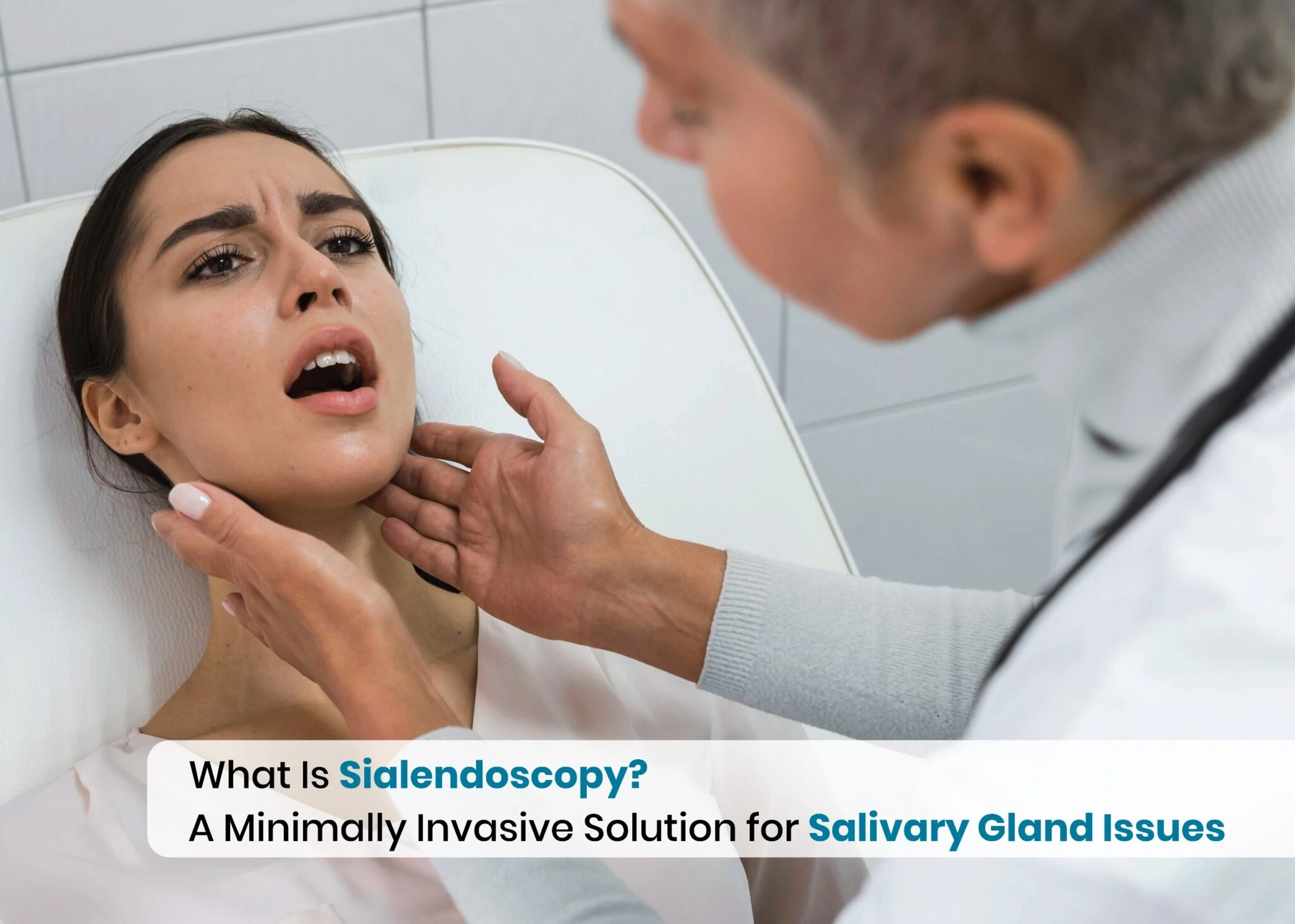
Sialendoscopy for Salivary Gland Issues has transformed the process of diagnosing and treating disorders of the salivary glands. In the past, patients with swollen glands, recurring infections, or salivary stones were subjected to open surgery, including huge cuts and prolonged recovery times. But with the introduction of sialendoscopy, treatment has become easier, safer, and more accurate.
At Amrita ENT Hospital, Hyderabad, we are experts in conducting advanced sialendoscopy treatments using cutting-edge equipment and skilled ENT specialists. This minimally invasive technique guarantees successful outcomes, quick recovery, and minimal pain to patients suffering from salivary gland problems.
Learn About the Salivary Glands and Their Function
The salivary glands are responsible for oral health and digestion. Saliva is secreted by the salivary glands, lubricating the mouth, beginning digestion, and eliminating infection by flushing out bacteria. There are three pairs of main salivary glands in humans:
• Parotid glands – under the ears
• Submandibular glands – under the jaw
• Sublingual glands – under the tongue
Each gland excretes saliva into the mouth via small ducts. When these ducts are clogged, infected, or reduced, it may lead to painful swelling, pain, and a problem with eating or swallowing. That’s when sialendoscopy is an innovation solution.
What Is Sialendoscopy?
Sialendoscopy is a minimally invasive diagnostic and treatment process that is utilized to investigate and treat conditions within the salivary ducts. Sialendoscopy involves the placement of a thin, flexible endoscope known as a sialendoscope through the salivary duct’s natural orifice—without the necessity of making any external incisions.
By the use of this small scope, the ENT expert is able to see the ducts live, detect blockages or stones, and extract them with micro-instruments. It’s a safe and very effective technique that saves the natural salivary gland as well as its function.
In Amrita ENT Hospital, our ENT experts utilize the latest sialendoscopy units incorporating high-definition cameras for precision, accuracy, and comfort of the patient.
Salivary Gland Problems Treated by Sialendoscopy
Sialendoscopy diagnoses and treats many salivary gland disorders, such as:
1. Salivary Duct Stones (Sialolithiasis)
Salivary stones are calcium stones that develop within the ducts and block the flow of saliva. They are painful, causing swelling mostly during meals when the flow of saliva increases. Sialendoscopy enables physicians to identify and have them removed without surgery.
2. Salivary Gland Infections (Sialadenitis)
When ducts get blocked, bacteria grow and lead to infection. Redness, swelling, and discharge of pus are symptoms. Sialendoscopy corrects the obstruction and clears infection-causing debris.
3. Recurrent Swelling of the Salivary Glands
Patients with recurrent swelling of the gland caused by narrowing of the ducts (strictures) are helped a lot by sialendoscopy. The procedure permits gentle opening of the ducts to permit normal flow of saliva.
4. Autoimmune Salivary Disorders
Conditions such as Sjögren’s syndrome lead to chronic dryness and inflammation. Sialendoscopy enhances gland drainage and alleviates pain in these situations.
5. Issues after Radiation
Head or neck radiation therapy patients can suffer from scarring or blockage of the ducts. Sialendoscopy presents a less invasive option to regain function.
Symptoms That Suggest Salivary Gland Issues
Prompt treatment depends on early diagnosis. If you notice any of the following symptoms, you might require an ENT specialist’s assessment and potential sialendoscopy for salivary gland issues:
• Recurring face or jaw swelling
• Discomfort or tenderness around the jaw or under the tongue
• Dryness of the mouth or decreased saliva secretion
• Trouble swallowing or eating
• Foul odor or pus discharge in the mouth
• Swelling that increases while eating
These signs usually indicate salivary duct infection or obstruction, both of which can be treated remarkably well with the help of sialendoscopy.
How is Sialendoscopy Done?
Sialendoscopy is done under local or general anesthesia, based on the patient’s condition and comfort. At Amrita ENT Hospital, we provide a trouble-free experience using the latest, minimally invasive technology.
Here’s what usually happens during the procedure:
1. Duct Access – The sialendoscope is gently passed by the ENT specialist through the natural salivary duct opening.
2. Duct Examination – Ducts are inspected in real-time to detect blockage, stones, or inflammation.
3. Treatment – If a stone or obstruction is detected, micro-instruments remove or flush it out. Dilation of the duct may be done if narrowing is present.
4. Flushing and Cleaning – The ducts are flushed out with saline or antibiotic solution to make them clean and in good working condition.
The procedure takes 30–60 minutes, depending on the complexity of the obstruction. The majority of patients can go home the same day.
Advantages of Sialendoscopy for Salivary Gland Issues
Selecting sialendoscopy instead of conventional open surgery has a number of advantages:
1. No External Scars – The procedure is carried out through the natural opening of the duct, creating no external scars.
2. Minimally Invasive – No incisions or stitches are needed, with less pain and downtime.
3. Quick Recovery – The majority of patients return to normal activities in a few days.
4. Preserves the Salivary Gland – Unlike conventional surgery, the gland is not removed, keeping normal saliva production.
5. Lower Risk of Complications – Less risk of nerve damage, infection, or uncontrolled bleeding.
6. High Success Rate – Sialendoscopy leads to effective long-term relief for the majority of patients.
These advantages render sialendoscopy for salivary gland disorders an ENT specialist and patient favorite.
Recovery and Post-Procedure Care After Sialendoscopy
Following the procedure, patients should not feel more than mild tenderness or swelling at the site of treatment, which dissipates within a few days.
The following are the key aftercare guidelines for uneventful recovery:
• Increase fluid intake in the form of water to keep saliva flowing.
• Use warm compresses to reduce swelling.
• Massage the gland area gently if instructed by your doctor.
• Skip spicy or acidic foods for a couple of days.
• Use prescribed antibiotics or anti-inflammatory drugs.
• Resume follow-up with your ENT specialist for a post-procedure checkup.
Our experts at Amrita ENT Hospital offer individualized post-procedure care to achieve complete recovery and extended relief from salivary gland problems.
Why Choose Amrita ENT Hospital for Sialendoscopy?
When it is about sialendoscopy for salivary gland issues, the selection of the best ENT hospital becomes everything.
Amrita ENT Hospital, Hyderabad, is a preeminent destination for cutting-edge ear, nose, and throat procedures. Here’s why patients choose us:
• Skilled ENT Surgeons: Our physicians are well-qualified in carrying out state-of-the-art sialendoscopy with accuracy.
• Advanced Equipment: We employ high-definition endoscopes and state-of-the-art laser equipment for precise diagnosis and treatment.
• Personalized Approach: Each treatment plan is customized for utmost comfort and efficacy.
• Minimally Invasive Technique: We opt for procedures that result in quicker healing and less discomfort.
• Seamless ENT Care: From diagnosis to rehabilitation after treatment, we offer total care under one roof.
Our aim is to provide world-class ENT care with the integration of technology, expertise, and compassion.
When to See a Specialist for Sialendoscopy
If you have been experiencing recurring swelling, pain, or salivary gland infection, don’t take it lightly. Early consultation with an ENT specialist can prevent complications and save your gland function.
At Amrita ENT Hospital, we assess each patient thoroughly to find out if sialendoscopy is the optimal treatment option. In most cases, early intervention can restore normal salivary flow to the fullest without surgery.
Conclusion
Sialendoscopy for Salivary Gland Issues is an innovative technology that has revolutionized the treatment of salivary duct diseases. It’s a painless, safe, and highly successful option compared to open surgery — with rapid recovery, little discomfort, and lasting relief.
At Amrita ENT Hospital, Hyderabad, our experienced ENT experts are dedicated to providing the best standards of care with the latest technology. From salivary stones to recurrent gland infections or blockage of ducts, sialendoscopy can restore comfort and confidence in daily life.
Schedule your consultation today at Amrita ENT Hospital and enjoy sophisticated, patient-centered treatment for salivary gland disorders.