
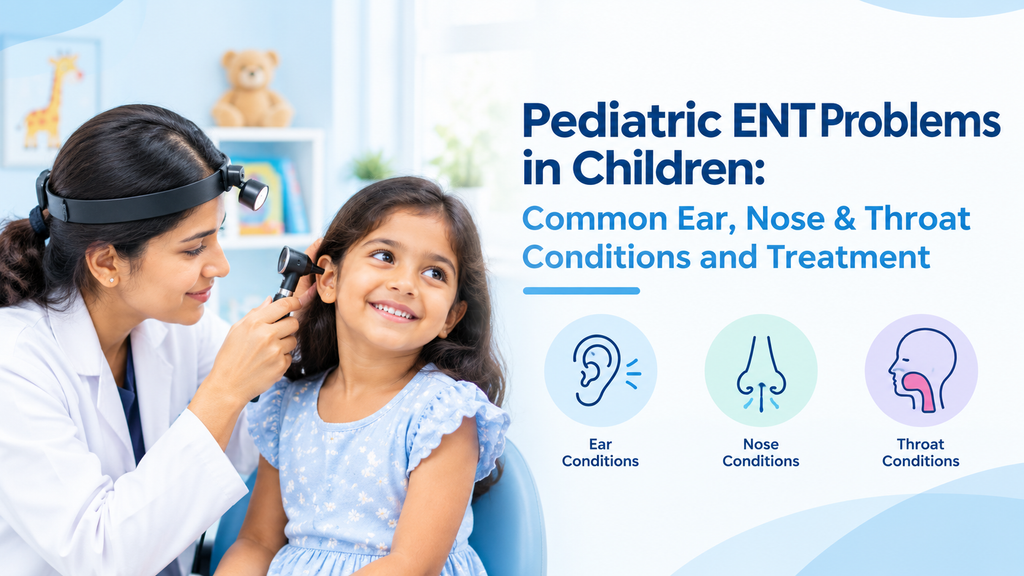
Children can experience a range of ear, nose and throat (ENT) problems as they grow. Ear infections, blocked noses, enlarged adenoids, tonsil problems, hearing difficulties and breathing issues can affect a child’s sleep, speech, hearing, feeding, school performance and overall comfort.
A pediatric ENT specialist in Hyderabad evaluates these problems with consideration for a child’s age, symptoms, development and individual needs.
At Amrita ENT & Head–Neck Hospital, pediatric ENT care focuses on evaluating and treating common ear, nose and throat conditions in infants, children and adolescents.
What Is Pediatric ENT?
Pediatric ENT, or pediatric otolaryngology, focuses on conditions affecting the:
- Ears
- Nose and sinuses
- Throat
- Tonsils and adenoids
- Hearing and balance
- Breathing and sleep
- Voice and swallowing
Children are not simply smaller versions of adults. Their ENT problems may present differently, and some conditions can affect hearing, speech, sleep and development if they persist.
Common Pediatric ENT Problems
Some of the common conditions evaluated by a pediatric ENT include:
- Ear infections
- Recurrent ear infections
- Enlarged adenoids
- Enlarged tonsils
- Tonsillitis
- Nasal blockage
- Mouth breathing
- Snoring
- Sleep-related breathing problems
- Hearing difficulties
- Speech and language concerns related to hearing
- Sinus and nasal problems
- Earwax blockage
- Fluid behind the eardrum
Let’s look at some of these conditions in more detail.
1. Ear Infection in Children
Ear infections are common during childhood. They may occur after a cold or respiratory infection and can involve the middle ear.
Common symptoms of an ear infection in children
Depending on the child’s age, symptoms may include:
- Ear pain
- Pulling or rubbing the ear
- Irritability
- Fever
- Difficulty sleeping
- Reduced response to sounds
- Difficulty hearing
- Fluid or discharge from the ear
Younger children may not be able to explain that their ear hurts, so changes in behaviour, sleep or response to sound can sometimes be important clues.
Repeated ear infections or persistent fluid in the middle ear may affect hearing. An ENT evaluation can help determine whether further assessment or treatment is needed.
2. Enlarged Adenoids in Children
Adenoids are tissues located behind the nose that are part of the immune system. They can naturally become larger during childhood.
In some children, enlarged adenoids can contribute to nasal blockage and breathing difficulties.
Symptoms of enlarged adenoids
Children with enlarged adenoids may experience:
- Persistent nasal blockage
- Mouth breathing
- Snoring
- Noisy breathing during sleep
- Restless sleep
- Nasal-sounding speech
- Frequent nasal or throat problems
- Difficulty breathing through the nose
- Recurrent ear problems in some children
Not every child with enlarged adenoids needs surgery. The appropriate approach depends on the symptoms, examination findings and how significantly the condition is affecting the child.
3. Adenoid Treatment in Hyderabad
The treatment of enlarged adenoids depends on their size, symptoms and associated problems.
Depending on the child’s condition, management may include:
- Observation and monitoring
- Medical treatment when appropriate
- Management of associated nasal or allergic problems
- Evaluation of hearing when required
- Surgical treatment in selected cases
If enlarged adenoids are causing significant nasal obstruction, recurrent problems or sleep-related breathing difficulties, an ENT specialist may discuss whether adenoidectomy is appropriate.
4. What Is Adenoidectomy?
Adenoidectomy is a surgical procedure to remove the adenoid tissue.
It may be considered when enlarged or chronically problematic adenoids contribute to issues such as:
- Persistent nasal obstruction
- Significant mouth breathing
- Sleep-related breathing problems
- Recurrent problems associated with the adenoids
- Certain middle-ear or hearing-related problems
The decision for surgery should be based on the child’s symptoms and clinical evaluation rather than adenoid size alone.
5. Tonsil Problems in Children
The tonsils are tissues located at the back of the throat. They are part of the body’s immune system.
Children can develop tonsillitis, which may cause:
- Sore throat
- Pain while swallowing
- Fever
- Enlarged or inflamed tonsils
- Swollen glands in the neck
- Bad breath
- Reduced appetite
Some children may also have enlarged tonsils that contribute to snoring or obstructed breathing during sleep.
Tonsil treatment in children
Treatment depends on the underlying cause and severity.
A pediatric ENT specialist may recommend observation, medical treatment or, in selected situations, surgery.
Tonsil surgery is not necessary for every child with enlarged tonsils or tonsillitis. The decision depends on the child’s medical history, symptoms and examination.
6. Snoring and Sleep Problems in Children
Occasional snoring can occur when a child has a cold or nasal congestion. However, frequent or loud snoring may require evaluation.
Persistent snoring can sometimes be associated with enlarged tonsils, enlarged adenoids or other causes of upper-airway obstruction.
Parents should discuss persistent snoring with an ENT specialist, particularly when it is associated with:
- Pauses in breathing during sleep
- Gasping or choking sounds
- Restless sleep
- Mouth breathing
- Frequent waking
- Excessive daytime sleepiness
- Difficulty concentrating
- Behavioural changes
A proper evaluation can help identify the underlying cause.
7. Hearing Problems in Children
Hearing plays an important role in speech and language development.
Possible signs of hearing difficulty include:
- Not responding consistently when called
- Increasing the volume of television or devices
- Difficulty following instructions
- Asking people to repeat themselves
- Speech or language difficulties
- Poor response to sounds
- Difficulty understanding speech in noisy environments
Hearing problems can have different causes, including ear infections, middle-ear fluid, earwax and other ear conditions.
When hearing concerns persist, an ENT evaluation and age-appropriate hearing assessment may be recommended.
When Should a Child See a Pediatric ENT Specialist?
Parents should consider an ENT evaluation when a child has persistent or recurrent:
- Ear infections
- Hearing difficulties
- Ear discharge
- Nasal blockage
- Mouth breathing
- Snoring
- Sleep-related breathing problems
- Enlarged tonsils or adenoids
- Difficulty swallowing
- Recurrent throat infections
- Voice changes
- Speech concerns associated with possible hearing problems
Early evaluation can help identify the underlying problem and determine whether monitoring, medical treatment or another intervention is appropriate.
What Happens During a Pediatric ENT Consultation?
A pediatric ENT consultation generally begins with a discussion about the child’s symptoms and medical history.
Depending on the concern, the doctor may evaluate:
- Ears
- Nose
- Throat
- Tonsils
- Adenoids
- Hearing
- Breathing and sleep symptoms
Additional tests may be recommended when clinically appropriate.
The goal is to identify the cause of the symptoms and develop a treatment plan suited to the child’s condition.
Why Choose Pediatric ENT Care?
Children may have ENT conditions that affect several areas at the same time. For example, enlarged adenoids may be associated with nasal blockage, mouth breathing, snoring and certain ear problems.
A structured ENT evaluation can help connect these symptoms and identify the underlying cause rather than treating each symptom separately.
Pediatric ENT in Hyderabad
Parents looking for pediatric ENT in Hyderabad may seek evaluation for ear infections, hearing concerns, enlarged adenoids, tonsil problems, nasal blockage, snoring and other ENT conditions.
At Amrita ENT & Head–Neck Hospital, KPHB, Kukatpally, Hyderabad, pediatric ENT evaluation is available for infants, children and adolescents with ear, nose and throat concerns.
If your child has recurrent ear infections, persistent mouth breathing, enlarged adenoids, frequent tonsil problems, hearing concerns or ongoing snoring, an ENT consultation can help determine the appropriate next step.
Frequently Asked Questions
1. What does a pediatric ENT specialist treat?
A pediatric ENT specialist evaluates ear, nose and throat conditions in children, including ear infections, hearing problems, enlarged adenoids, tonsil problems, nasal blockage, snoring and sleep-related breathing issues.
2. When should my child see a pediatric ENT?
Consider an ENT evaluation if your child has recurrent ear infections, persistent nasal blockage, mouth breathing, frequent snoring, hearing difficulties, recurrent throat infections or sleep-related breathing problems.
3. Do enlarged adenoids always require surgery?
No. Treatment depends on the child’s symptoms, examination findings and associated problems. Some children may be managed with observation or medical treatment, while surgery may be considered in selected cases.
4. What is adenoidectomy?
Adenoidectomy is a surgical procedure to remove the adenoid tissue. It may be considered when enlarged or problematic adenoids contribute to significant nasal obstruction, sleep-related breathing problems or certain recurrent ear-related issues.
5. Can ear infections affect a child’s hearing?
Some ear infections or persistent middle-ear fluid can temporarily reduce hearing. Recurrent or persistent hearing problems should be evaluated by an ENT specialist.
6. Is snoring normal in children?
Occasional snoring can happen during a cold or nasal congestion. Frequent or loud snoring, particularly when associated with pauses in breathing, restless sleep or mouth breathing, should be discussed with a pediatric ENT specialist.
About Amrita ENT & Head–Neck Hospital
Amrita ENT & Head–Neck Hospital provides evaluation and treatment for ear, nose and throat conditions affecting children and adults.
Located in KPHB, Kukatpally, Hyderabad, the hospital provides ENT care for conditions involving the ear, nose, throat, hearing, breathing, tonsils, adenoids and related head and neck problems.
For persistent or recurrent ENT symptoms in children, a specialist evaluation can help identify the cause and guide appropriate treatment.
Related Pediatric ENT Topics
- Pediatric ENT in Hyderabad
- Pediatric ENT in Kukatpally
- Adenoid Treatment in Hyderabad
- Enlarged Adenoids in Children
- Adenoidectomy
- Tonsil Treatment in Children
- Ear Infection in Children
- Snoring Treatment in Hyderabad
- Hearing Loss in Children
Book an appointment with an ENT specialist if your child has persistent or recurrent ear, nose or throat symptoms.