
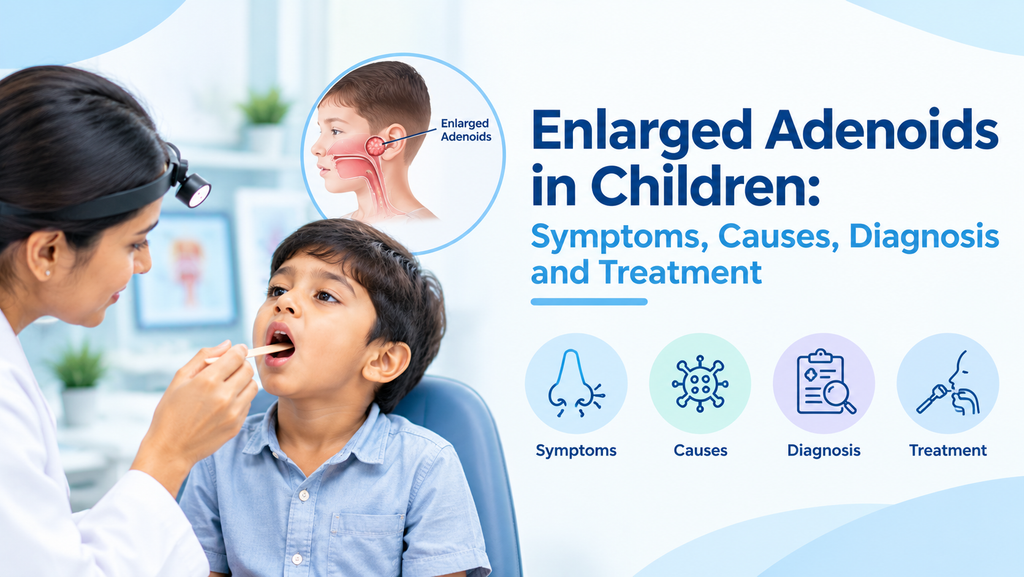
Adenoids are a normal part of the immune system and are located behind the nose, where the nasal passages connect with the throat. During childhood, adenoids can naturally become larger as the immune system develops.
In some children, however, enlarged adenoids can interfere with normal breathing, sleep, hearing or nasal function. Symptoms such as persistent mouth breathing, nasal blockage, snoring or recurrent ear problems may sometimes be associated with enlarged adenoids.
Understanding the symptoms and getting an appropriate evaluation can help determine whether a child needs observation, medical treatment or, in selected cases, surgery.
What Are Adenoids?
Adenoids are a patch of lymphoid tissue located behind the nose. They are part of the body’s immune system and help respond to germs entering through the nose and mouth.
Adenoids are most prominent during childhood. As children grow, adenoids usually become smaller.
Sometimes, adenoids become enlarged or remain enlarged for longer than expected. When this affects breathing or causes other problems, an ENT evaluation may be recommended.
What Causes Enlarged Adenoids in Children?
Several factors can contribute to enlarged adenoids, including:
- Repeated upper respiratory infections
- Ongoing inflammation
- Allergic conditions
- Recurrent nasal or throat infections
- Natural enlargement during childhood
The presence of enlarged adenoids does not necessarily mean that a child has a serious medical problem. Treatment depends on symptoms and their impact on the child’s health and daily activities.
Symptoms of Enlarged Adenoids in Children
The symptoms can vary from child to child.
Common symptoms may include:
1. Persistent Nasal Blockage
A child may have difficulty breathing through the nose, particularly when the adenoids obstruct the area behind the nasal passages.
2. Mouth Breathing
Children with significant nasal obstruction may start breathing mainly through their mouth.
Persistent mouth breathing should be evaluated because it may indicate an underlying nasal or upper-airway problem.
3. Snoring
Enlarged adenoids can contribute to narrowing of the upper airway during sleep, which may result in snoring.
Occasional snoring during a cold is common. Frequent or loud snoring may require further assessment.
4. Restless Sleep
A child with obstructed nasal or upper-airway breathing may have restless or disturbed sleep.
Parents may notice frequent movement, unusual sleeping positions or repeated waking.
5. Sleep-Related Breathing Problems
In some children, enlarged adenoids can contribute to obstructive breathing during sleep.
Parents should seek medical evaluation if they notice:
- Pauses in breathing
- Gasping during sleep
- Choking sounds
- Very loud or persistent snoring
- Difficulty breathing while asleep
6. Nasal-Sounding Speech
When airflow through the nose is restricted, a child’s voice may sound different or more nasal.
7. Recurrent Ear Problems
The adenoids are located near the openings of the Eustachian tubes, which help ventilate the middle ear.
Enlarged or chronically inflamed adenoids may sometimes be associated with middle-ear problems or recurrent ear infections.
8. Difficulty Breathing Through the Nose
Some children may consistently struggle to breathe through their nose and prefer breathing through their mouth.
Can Enlarged Adenoids Affect Hearing?
They can sometimes be associated with middle-ear problems.
The Eustachian tubes connect the middle ear to the area behind the nose. Problems in this region can contribute to fluid accumulation in the middle ear.
Persistent middle-ear fluid can cause temporary hearing reduction.
If parents notice that a child:
- Does not respond consistently when called
- Frequently asks for repetition
- Increases the television volume
- Has difficulty following conversations
- Has speech or language concerns
An ENT evaluation and hearing assessment may be appropriate.
How Are Enlarged Adenoids Diagnosed?
An ENT specialist begins by understanding the child’s symptoms and medical history.
The evaluation may include examination of the:
- Nose
- Throat
- Ears
- Tonsils
- Upper airway
Depending on the child’s symptoms, additional evaluation may be recommended.
The doctor may assess whether the adenoids are contributing to nasal obstruction, sleep-related breathing problems, recurrent ear issues or other symptoms.
Enlarged Adenoids vs Normal Adenoids
Having enlarged adenoids does not automatically mean that treatment is required.
Some children have relatively large adenoids without significant symptoms.
Treatment is generally considered based on factors such as:
- Severity of symptoms
- Persistent nasal obstruction
- Sleep-related breathing problems
- Recurrent or persistent ear problems
- Hearing concerns
- Impact on the child’s daily life
The clinical symptoms are therefore important when deciding whether treatment is needed.
Adenoid Treatment in Hyderabad
The appropriate treatment for enlarged adenoids depends on the child’s symptoms and examination findings.
Possible approaches include:
Observation
If symptoms are mild and not causing significant problems, an ENT specialist may recommend monitoring the child.
Medical Treatment
When appropriate, medical management may be used to address associated nasal inflammation, allergies or other contributing conditions.
Treatment of Associated Problems
If enlarged adenoids are associated with ear problems, nasal symptoms or sleep-related breathing difficulties, those conditions may also need to be evaluated and managed.
Adenoidectomy
In selected children, an ENT specialist may recommend surgical removal of the adenoids.
What Is Adenoidectomy?
Adenoidectomy is a surgical procedure in which the adenoid tissue is removed.
It may be considered when enlarged or chronically problematic adenoids contribute to significant symptoms such as:
- Persistent nasal obstruction
- Significant mouth breathing
- Sleep-related breathing problems
- Certain recurrent ear problems
- Persistent middle-ear fluid or related hearing concerns in selected cases
The decision to perform an adenoidectomy depends on the child’s individual symptoms and clinical assessment.
Does Every Child With Enlarged Adenoids Need Adenoidectomy?
No.
Some children with enlarged adenoids have few or no symptoms and may not require surgery.
An ENT specialist considers the overall clinical picture, including symptoms, examination findings and associated conditions, before recommending an adenoidectomy.
What Happens During an Adenoidectomy?
Adenoidectomy is generally performed under general anaesthesia.
The surgeon removes the enlarged adenoid tissue through the mouth, without an external skin incision.
The specific surgical approach and recovery plan depend on the child’s individual circumstances.
Parents should discuss the expected procedure, potential risks, recovery and aftercare with the treating ENT surgeon.
Recovery After Adenoidectomy
Recovery varies between children.
Some children may experience temporary:
- Throat discomfort
- Nasal congestion
- Changes in voice
- Bad breath
- Mild discomfort while eating
The treating doctor will provide specific postoperative instructions, including guidance about food, activity and medications.
Parents should follow the surgeon’s instructions and attend any recommended follow-up appointments.
When Should Parents Consult a Pediatric ENT?
Consider an evaluation if your child has persistent or recurrent:
- Nasal blockage
- Mouth breathing
- Loud or frequent snoring
- Restless sleep
- Pauses in breathing during sleep
- Recurrent ear infections
- Hearing difficulties
- Nasal-sounding speech
- Difficulty breathing through the nose
An ENT specialist can determine whether enlarged adenoids are contributing to these symptoms.
Enlarged Adenoids and Sleep
One of the important reasons for evaluating enlarged adenoids is their possible effect on sleep.
If enlarged adenoids contribute to upper-airway obstruction, a child may have difficulty breathing normally during sleep.
Parents should pay attention to persistent snoring, mouth breathing, unusual sleeping positions or breathing pauses.
These symptoms do not necessarily mean that enlarged adenoids are the cause, which is why proper medical evaluation is important.
Frequently Asked Questions
Are enlarged adenoids common in children?
Yes. Adenoids naturally change in size during childhood. The important consideration is whether enlargement is causing persistent symptoms or associated problems.
What are the most common symptoms of enlarged adenoids?
Common symptoms include nasal blockage, mouth breathing, snoring, restless sleep and, in some children, recurrent ear problems or hearing difficulties.
Can enlarged adenoids cause snoring?
Enlarged adenoids can contribute to narrowing of the upper airway and may be one of the causes of persistent snoring in children.
Can enlarged adenoids affect hearing?
They can sometimes contribute to middle-ear problems or fluid behind the eardrum, which may temporarily affect hearing.
Is adenoidectomy safe for children?
Adenoidectomy is a commonly performed ENT procedure, but like any surgery, it has potential risks. The ENT surgeon will assess whether the benefits of surgery are appropriate for the individual child.
Can enlarged adenoids go away without surgery?
In some children, symptoms may improve as the adenoids naturally become smaller with age. Depending on the symptoms, an ENT specialist may recommend observation or medical management instead of surgery.
When should I consult a pediatric ENT specialist?
Consult a pediatric ENT specialist if your child has persistent nasal blockage, mouth breathing, frequent snoring, sleep-related breathing problems, recurrent ear infections or hearing concerns.
Pediatric ENT Care in Hyderabad
Parents looking for pediatric ENT in Hyderabad may seek specialist evaluation for enlarged adenoids, tonsil problems, ear infections, hearing concerns, nasal obstruction and sleep-related breathing problems.
Amrita ENT & Head–Neck Hospital, located in KPHB, Kukatpally, Hyderabad, provides ENT evaluation and treatment for children with ear, nose and throat conditions.
If your child has persistent mouth breathing, loud snoring, recurrent ear infections or difficulty breathing through the nose, an ENT consultation can help identify the underlying cause and appropriate treatment options.