
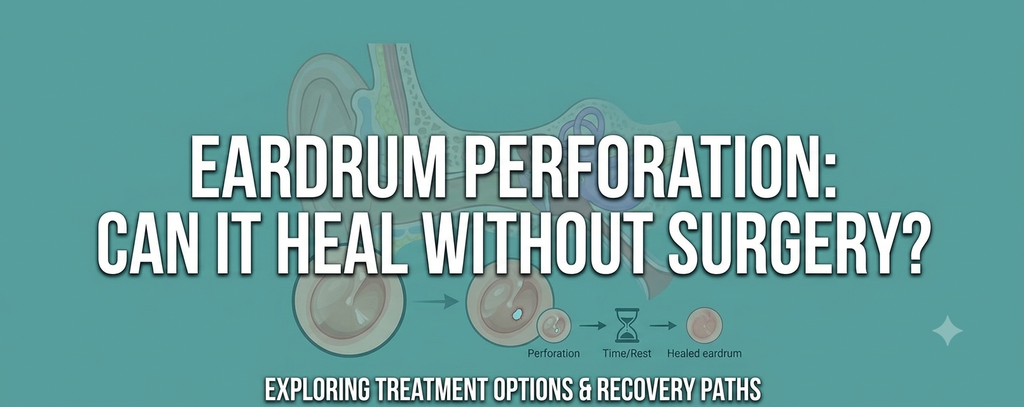
Can an Eardrum Perforation Heal Without Surgery?
Yes. Some eardrum perforations heal naturally without surgery, particularly when the hole is small and the ear remains free from infection. However, larger perforations, persistent holes, recurrent ear discharge or associated hearing loss may require further treatment.
An eardrum perforation, also called a ruptured eardrum or tympanic membrane perforation, is a hole or tear in the thin membrane separating the outer ear from the middle ear.
If you have an eardrum perforation, an ENT specialist can assess its size, location, cause and effect on hearing before recommending treatment.
What Causes an Eardrum Perforation?
Common causes include:
1. Middle Ear Infection
An ear infection can cause fluid or pus to build up behind the eardrum. Pressure may lead to a perforation, sometimes accompanied by discharge and pain.
2. Ear Injury
Inserting cotton buds, hairpins or other objects into the ear canal can injure the eardrum.
3. Sudden Pressure Changes
Changes in pressure during air travel, diving or other situations can sometimes damage the eardrum.
4. Loud Blast or Sudden Trauma
A nearby explosion, very loud blast or direct injury can cause a tear in the eardrum.
What Are the Symptoms of a Perforated Eardrum?
Symptoms vary depending on the cause and severity. They may include:
- Ear pain, sometimes followed by sudden relief
- Ear discharge, which may contain fluid or pus
- Reduced hearing in the affected ear
- Ringing in the ear (tinnitus)
- Dizziness in some cases
Sudden hearing loss, severe vertigo or significant ear trauma warrants urgent medical assessment.
How Is an Eardrum Perforation Diagnosed?
An ENT specialist usually examines the ear with an otoscope or microscope to identify the perforation.
A hearing test may be recommended to assess the degree of hearing loss. Further testing depends on the cause, duration and associated symptoms.
Avoid putting unprescribed ear drops or other substances into the ear before the eardrum has been assessed.
What Is the Treatment for Eardrum Perforation?
Treatment depends on the size of the hole, the cause, infection status and hearing findings.
Observation: Small perforations may heal naturally. The doctor may recommend follow-up to confirm closure.
Keeping the ear dry: Preventing water from entering the ear can help reduce the risk of infection while the perforation heals.
Treatment for infection: If an infection is present, the doctor may prescribe appropriate medication. Only ear drops considered safe for a perforated eardrum should be used.
Eardrum repair surgery: A persistent perforation may require myringoplasty or tympanoplasty, depending on the findings and surgical plan.
When Is Tympanoplasty or Myringoplasty Needed?
Surgery may be considered when the eardrum does not heal, recurrent infections occur, or hearing problems persist.
Myringoplasty focuses on repairing the eardrum, while tympanoplasty may involve repair of the eardrum and, when necessary, reconstruction of the middle-ear structures.
The recommended procedure depends on the perforation, hearing status and condition of the middle ear.
What Precautions Should You Follow With a Perforated Eardrum?
- Keep water out of the affected ear while it heals.
- Avoid swimming until your doctor confirms it is safe.
- Do not insert cotton buds or other objects into the ear canal.
- Avoid self-medicating with ear drops.
- Attend recommended follow-up appointments.
- Seek medical care if pain, discharge, dizziness or hearing loss worsens.
Eardrum Perforation Treatment in Hyderabad
Patients looking for eardrum perforation treatment or assessment for tympanoplasty in KPHB, Hyderabad, can contact Amrita ENT & Head–Neck Hospital to enquire about an ENT consultation.
The doctor can assess the perforation and advise whether observation, medical management or eardrum repair surgery may be appropriate.
Hospital: Amrita ENT & Head–Neck Hospital
Location: KPHB, Hyderabad
Phone/WhatsApp: 7032255931
Website: https://amritaent.com/
Frequently Asked Questions
Many small perforations heal over several weeks, although some take longer. Persistent perforations require reassessment.
Yes. Some perforations heal naturally. Surgery may be considered when the hole persists or causes recurrent infections or hearing problems.
It can cause conductive hearing loss, and persistent problems may occur depending on the damage. Timely assessment helps identify the appropriate treatment.
Myringoplasty repairs the eardrum. Tympanoplasty may include eardrum repair and additional reconstruction of the middle ear when required.